
Japan is attracting global attention as a “front-runner in a super-aging society.”
This year, a group of 35 students and faculty members from the Singapore University of Social Sciences visited BABA lab Saitama Workshop (hereafter “the Workshop”), a workplace where people can continue working even at the age of 100.
This report introduces the details of the program.

Why Visit BABA lab Saitama Workshop?
On November 28, 2025, we welcomed 35 visitors, including a professor and seminar students from the Singapore University of Social Sciences.
This connection dates back to September 2021, during the COVID-19 pandemic, when BABA lab’s representative, Kuwahara, and staff member Tomoyasu participated in a symposium held in Singapore.
Singapore is one of the countries expected to experience rapid population aging, even faster than Japan. The country is actively developing “Active Aging Centers,” which are community facilities for older adults.
The visitors from the university spent about a week touring senior-related facilities across Japan, and our Workshop was selected as one of their destinations.
While university visits often bring to mind young students, in Singapore it is common for people to work before entering university. Among the participants were families and even individuals expecting their first grandchild.

Preparation for Hosting the Group
Since the Workshop is located in a rented private house, it cannot accommodate 35 people at once.
To address this, we rented the neighboring space, Community Space Hobonora, and divided the visitors into three groups, rotating them every 30 minutes.
Group A: Introduction to BABA lab’s activities by the representative, followed by discussion
Group B: Hands-on experience making finger-knitted scrunchies with senior participants
Group C: Observation and hands-on experience of workshop production, plus shopping for handmade goods

For Group B, materials had to be prepared in advance by winding yarn around cardboard sheets (about 6 meters each). Staff members who could not attend on the day contributed by helping prepare these materials while chatting during regular workshop activities.
The Visit Begins
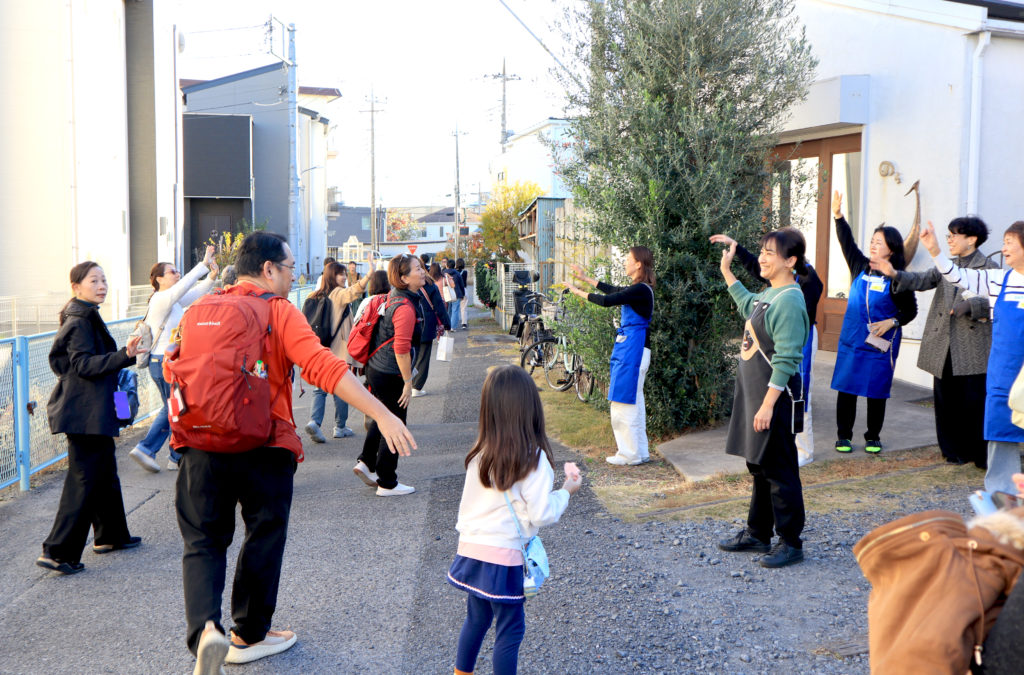
The Workshop is located on a narrow street, so the group arrived on foot after parking their bus nearby.
The professor and the representative were delighted to reunite, and the visitors brought many gifts from Singapore. As is customary, they began with a group photo in front of the Workshop.
Fortunately, the weather was clear. Japanese student interpreters accompanied the group, which reassured the Workshop staff who were not confident in English. Since participants had been informed in advance about the group divisions, the visit proceeded smoothly.
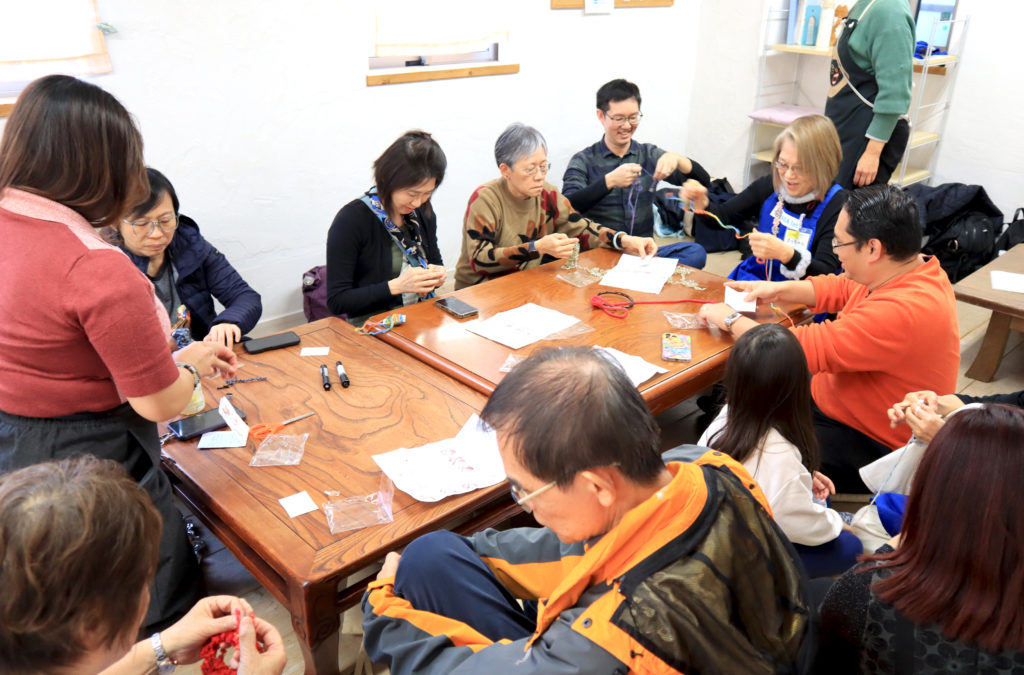
Group A: Presentation and Discussion
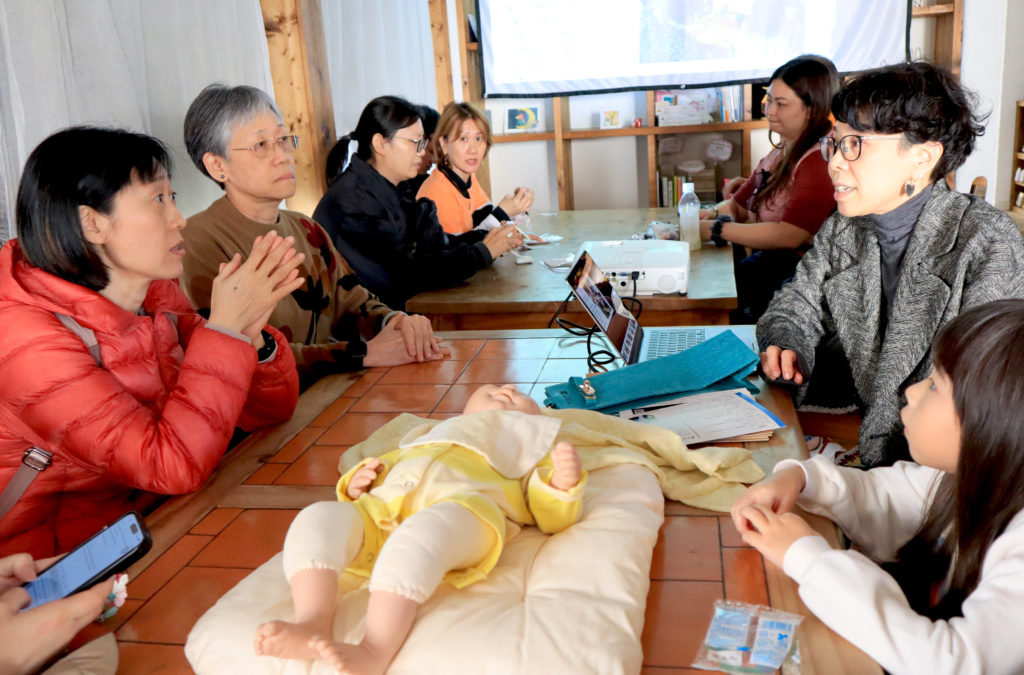
In Group A, Kuwahara gave an overview of Japan’s aging society and explained what BABA lab is.
Participants were also invited to try holding a “dakko futon” (a support cushion for holding newborn babies) along with a baby doll to better understand its functionality.
Questions included:
How are elderly workers compensated?
Why are there no male staff members?
What makes the dakko futon easy to use?
The session took place in Community Space Hobonora, which features a record player and speakers as part of the owner’s hobby. One student interpreter was fascinated to see a vinyl record playing for the first time and recorded it on their smartphone.
Group B: Craft Experience
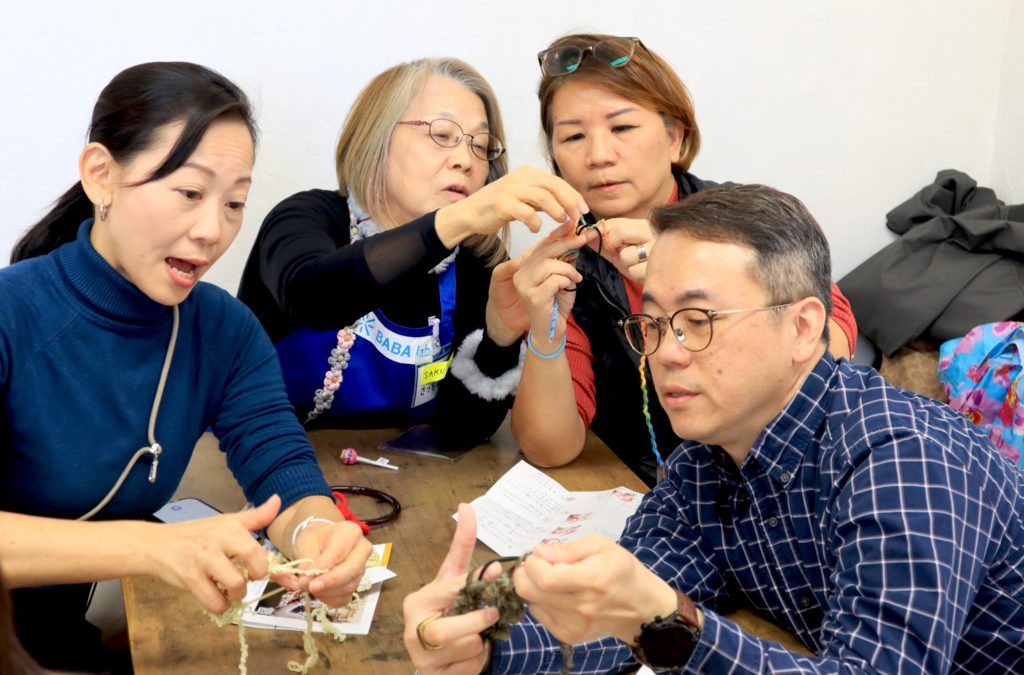
Group B participated in making finger-knitted scrunchies.
Staff members who had previously taught craft workshops led the session. After an English explanation, participants worked in small groups.
It became clear that, regardless of nationality, some people are more dexterous than others. Those who struggled received one-on-one guidance from the instructors.
Later, staff reflected on the experience, saying things like, “This person finished quickly, but the other person took quite a while—it was challenging!”
Group C: Workshop Tour and Hands-on Experience
Group C observed and participated in the Workshop’s production activities.
One popular handmade item is the “butterfly clip,” often given as a souvenir to visitors. It is made by wrapping fabric scraps around a clothespin and securing them with beads. Some visitors even tried to take it apart to understand how it was made.
The Workshop also produces fabric sandals. The material is created by tearing large pieces of fabric by hand. When staff explained that this process can also serve as a form of exercise, many participants eagerly wanted to try it.
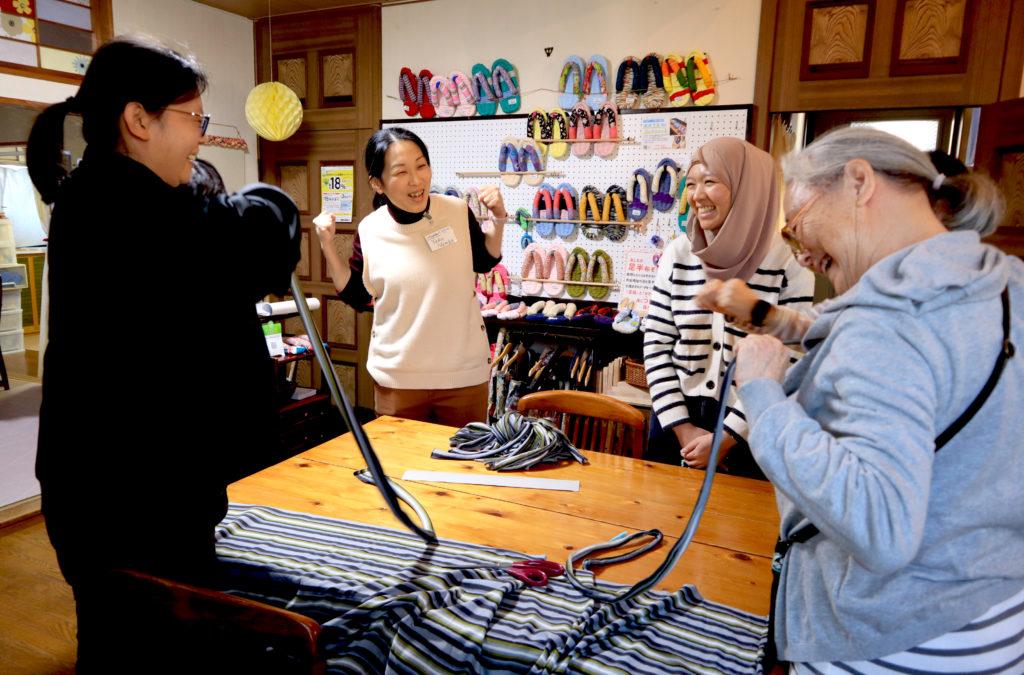
Group C (Extra): Shopping Experience
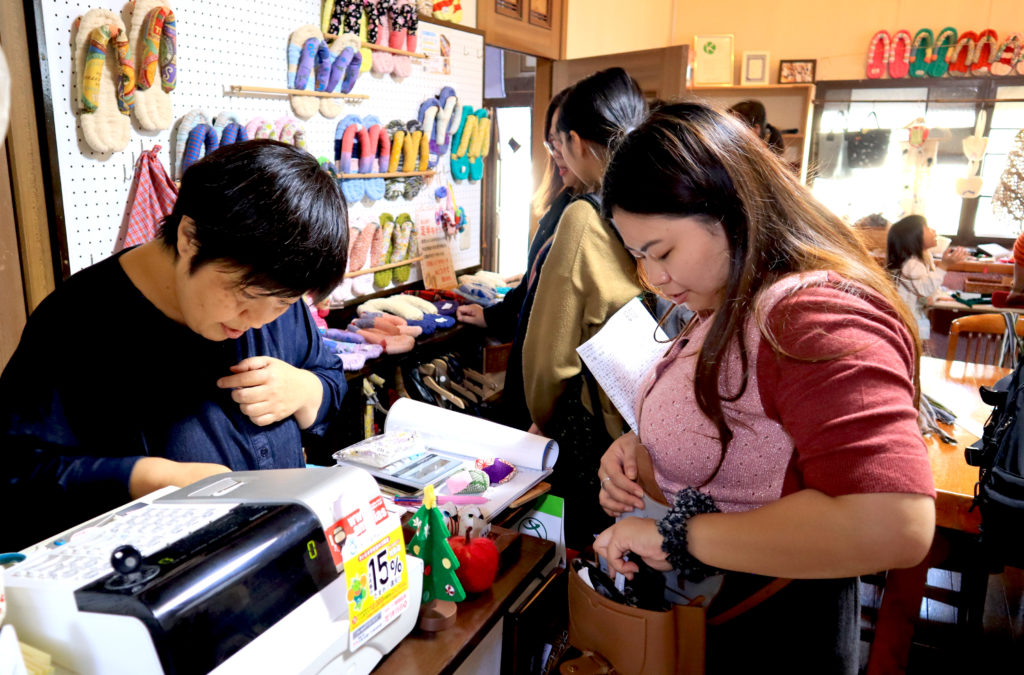
Although the visit was expected to focus mainly on observation, many participants ended up purchasing handmade items after seeing the production process.
They bought items as souvenirs or for personal use, particularly those unique to Japan, such as beanbags and fabric sandals.
After the Visit
After the program, the staff felt a strong sense of accomplishment and relief.
Receiving gifts from Singapore and having the opportunity to explain their work to others provided a valuable chance to reflect on their daily activities. The shared sentiment was, “That was fun—we hope they visit again.”
This year, the Workshop also hosted visitors from Scotland. Through these exchanges, we discovered both similarities (for example, “grandfathers tend not to go out,” with a laugh) and differences, such as in public support systems.
These international interactions have been both meaningful and enriching.


コメントを残す